Phra Dhammavachiracharn (Suchart Kittipanyo)
(Pali Studies Level 8, B.A. in Buddhist Studies, M.A. in Arts, Ph.D. in Buddhism)
Aims and ScopeThe Pāli–Theravāda Review Journal (PTRJ), ISSN xxxx-xxxx (Online), is an academic journal in Pāli and Theravāda Buddhist studies published by the Mahavajiralongkorn Pāli Theravāda Royal College Foundation, located in Rang Phikun Subdistrict, Kamphaeng Saen District, Nakhon Pathom Province. The journal was established as a scholarly platform to promote systematic study, research, and the advancement of knowledge in Pāli studies and Theravāda Buddhism. Its primary aim is to disseminate high-quality academic work that meaningfully contributes to the development of contemporary Buddhist studies.
The journal is committed to fostering the dissemination of knowledge related to the Tipiṭaka, commentaries (Aṭṭhakathā), sub-commentaries (Ṭīkā), and major canonical texts within the Theravāda tradition, as well as research in Pāli linguistics, Buddhist philosophy, ethics, history, social sciences, humanities, education, and Theravāda Buddhist intellectual heritage. This includes analytical studies of canonical texts, rigorous translations of Pāli scriptures, and scholarly critiques that enrich the field of Theravāda Buddhist studies.
With the intention of creating an open and inclusive academic environment, the journal encourages monks, researchers, scholars, and students to publish research articles, academic papers, translations, and critical reviews that have undergone strict scholarly evaluation. Furthermore, the journal supports the preservation, interpretation, and revitalization of ancient manuscripts and classical Buddhist literature in ways that align with contemporary social contexts, while upholding the spirit and essential principles of Theravāda Buddhism.
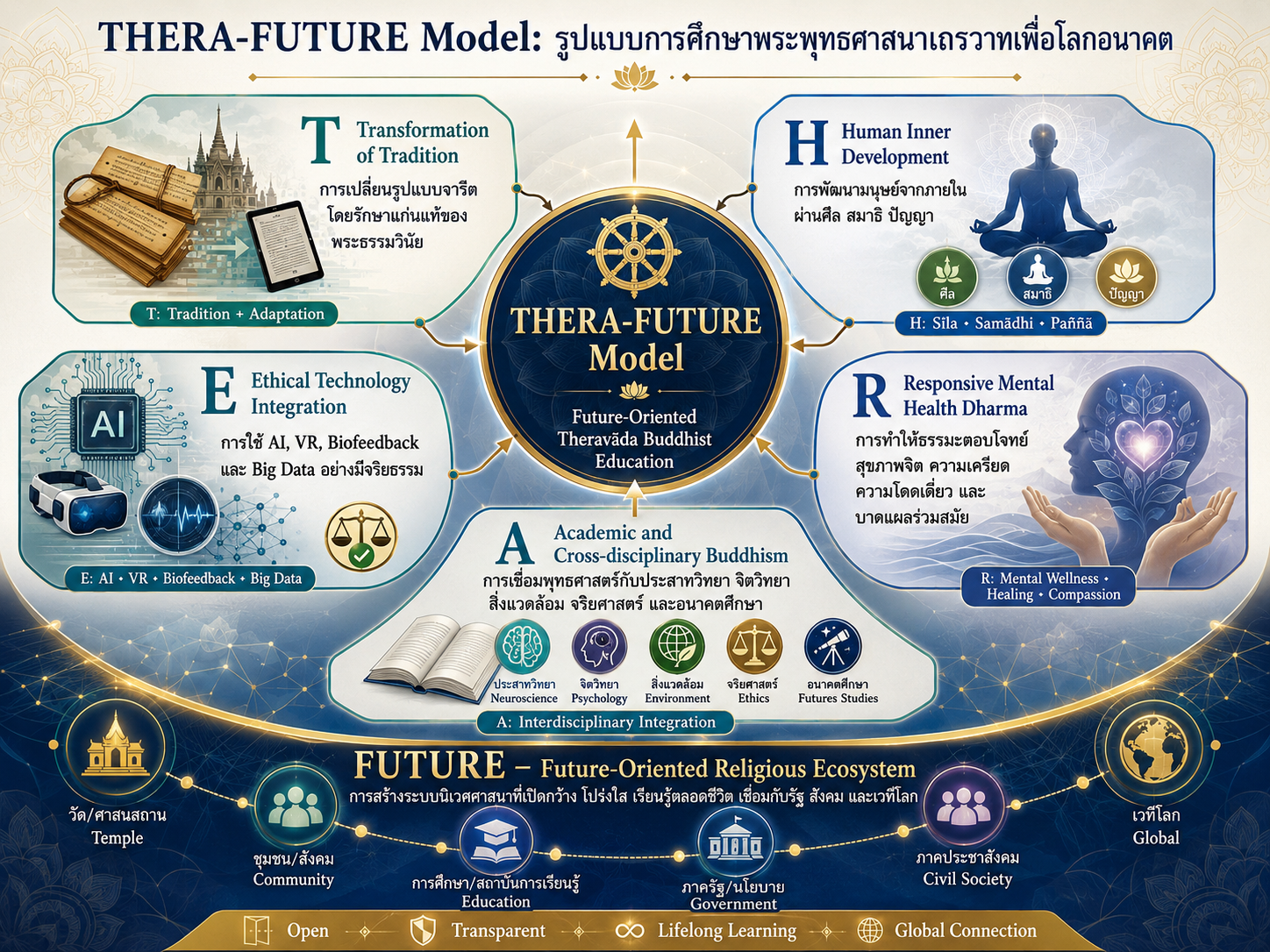
The journal also aims to broaden the scope of knowledge through interdisciplinary research that connects Theravāda studies with related fields such as linguistics, folklore, cultural studies, psychology, education, and community development. This interdisciplinary engagement fosters a more holistic understanding of the application of Theravāda principles in the modern world. In addition, the journal emphasizes the importance of building scholarly networks at both national and international levels, promoting the exchange of knowledge and research experiences, and ensuring transparent editorial processes in accordance with international research ethics and publishing standards.
Research Article
Academic Article
Pāli Text Review / Scriptural Commentary Review
Pāli Translation with Commentary
Special Article on Ancient Manuscripts
The journal is published twice a year as follows:
Issue 1: January – June
Issue 2: July – December
The Pāli–Theravāda Review Journal employs a double-blind peer review system in which both authors and reviewers remain anonymous. Each manuscript is evaluated by at least three qualified experts in relevant fields to ensure academic rigor and impartiality.