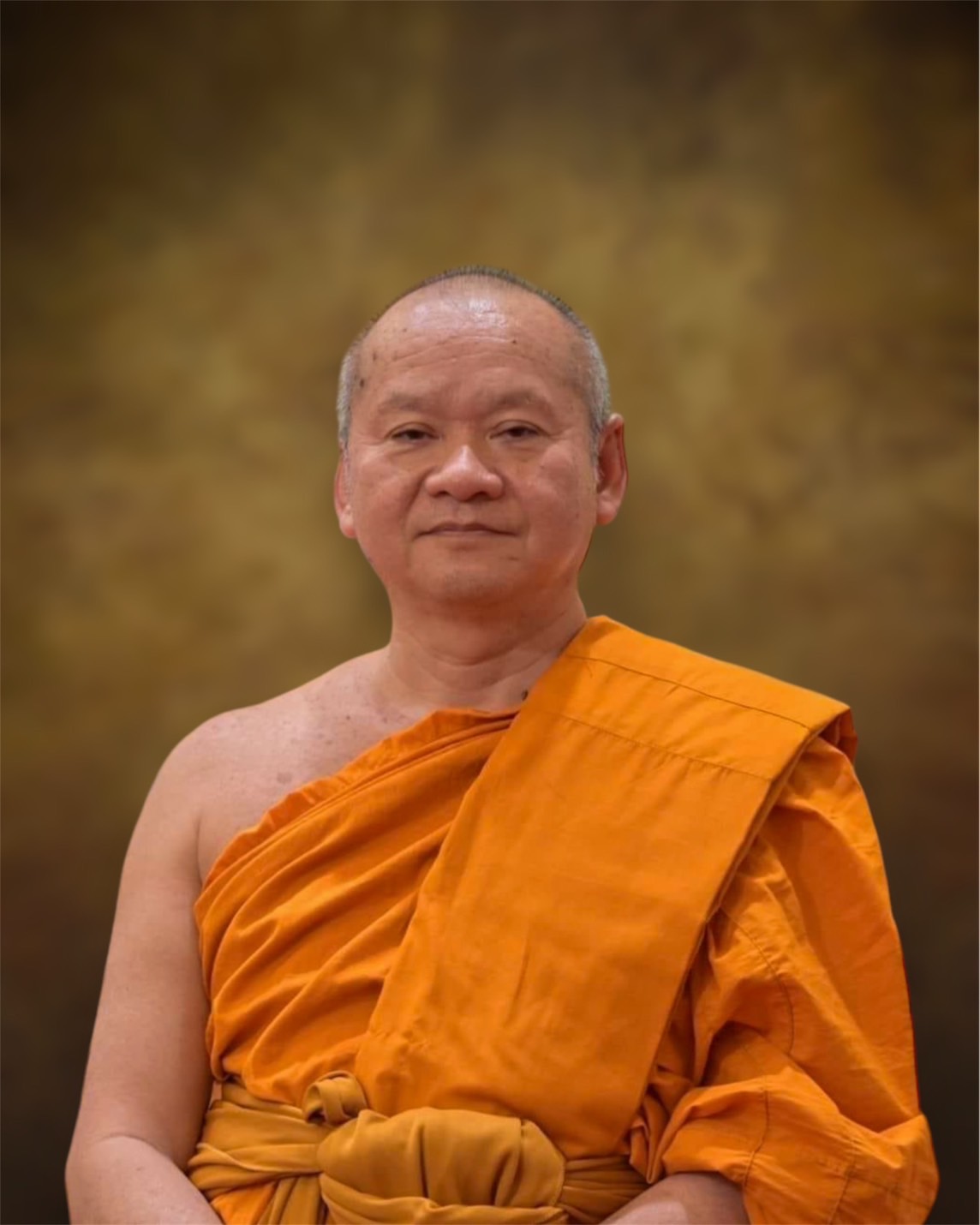
The Threefold Training for Contemporary Lay Life: Operationalizing Sīla, Samādhi, and Paññā for Self-Development in Thailand
คำสำคัญ:
Theravāda Buddhism, threefold training, mindfulness, five precepts, self-developmentบทคัดย่อ
Theravāda Buddhism remains the dominant religious tradition in Thailand and continues to shape lay ethics, family norms, and public moral discourse. Yet contemporary Thai lay life is increasingly characterized by accelerated work rhythms, digital distraction, rising interpersonal strain, and mental health challenges that are often addressed through fragmented “techniques” (e.g., meditation apps) detached from their ethical and wisdom foundations. This article proposes an applied model for self-development grounded in the canonical Theravāda framework of the threefold training (sikkhā): (1) sīla (ethical discipline), (2) samādhi (collectedness of mind), and (3) paññā (discernment/wisdom). Using documentary analysis of key Pāli sources—including the Satipaṭṭhāna discourse (MN 10/DN 22), the Noble Eightfold Path (SN 45), and lay teachings such as the Sigālovāda discourse (DN 31)—and integrating contemporary evidence on mindfulness-based and compassion-based interventions, this article develops a pragmatic “SST” (Sīla–Samādhi–Paññā in Daily Training) framework designed for householders. The model translates core doctrinal principles into operational practices: precept-based habit design and digital ethics for sīla; micro-practices of mindfulness, breath awareness, and walking meditation for samādhi; and structured reflection (yoniso manasikāra), causal mapping, and non-self reappraisal for paññā. Contemporary research indicates that mindfulness training can yield small-to-moderate benefits for cognition and psychological outcomes while Thai studies suggest additive protective effects when meditation is paired with precept adherence. The article further addresses ethical safeguards and potential adverse effects of contemplative practice, emphasizing informed consent and trauma-sensitive adaptation. The proposed framework aims to support evidence-informed, culturally resonant self-cultivation for Thai laypersons, and offers a program blueprint for temples, workplaces, and educational settings.
เอกสารอ้างอิง
Binda, D. D., Greco, C. M., & Morone, N. E. (2022). What are adverse events in mindfulness meditation? Global Advances in Health and Medicine, 11, 2164957X221096640. https://doi.org/10.1177/2164957X221096640
Bodhi, B. (Trans.). (2000). The connected discourses of the Buddha: A translation of the Saṃyutta Nikāya. Wisdom Publications.
Bodhi, B. (Trans.). (2012). The numerical discourses of the Buddha: A translation of the Aṅguttara Nikāya. Wisdom Publications.
Britton, W. B., Lindahl, J. R., Cooper, D. J., Canby, N. K., & Palitsky, R. (2021). Defining and measuring meditation-related adverse effects in mindfulness-based programs. Clinical Psychological Science, 9(6), 1185–1204.
https://doi.org/10.1177/2167702621996340
Chachignon, P., Le Barbenchon, E., & Dany, L. (2024). Mindfulness research and applications in the context of neoliberalism: A narrative and critical review. Social and Personality Psychology Compass, 18(2), e12936.
https://doi.org/10.1111/spc3.12936
DeMaranville, J., Wongpakaran, T., Wongpakaran, N., & Wedding, D. (2023). The mediating role of precepts and meditation on attachment and depressive symptoms in adolescents. Healthcare, 11(13), 1923. https://doi.org/10.3390/healthcare11131923
Glushich, A., DeMaranville, J., Wongpakaran, T., Wedding, D., & Wongpakaran, N. (2025). Synergistic effects of Buddhist five precepts and death contemplation on inner strengths and mental health in elderly Thai meditators. BMC Psychology, 13(1), 1342. https://doi.org/10.1186/ s40359-025-03679-9
Gong, X.-G., Wang, L.-P., Rong, G., Zhang, D.-N., Zhang, A.-Y., & Liu, C. (2023). Effects of online mindfulness-based interventions on the mental health of university students: A systematic review and meta-analysis. Frontiers in Psychology, 14, 1073647. https://doi.org/10.3389/fpsyg. 2023.1073647
Gu, X., Luo, W., Zhao, X., Chen, Y., Zheng, Y., Zhou, J., Zeng, X., Yan, L., Chen, Y., Zhang, X., Lv, J., Lang, Y., Wang, Z., Gao, C., Jiang, Y., & Li, R. (2022). The effects of loving-kindness and compassion meditation on life satisfaction: A systematic review and meta-analysis. Applied Psychology: Health and Well-Being, 14(3), 1081–1101. https://doi.org/10.1111/aphw.12367
Langgapin, S., Boonchieng, W., Chautrakarn, S., Maneeton, N., & Senawan, S. (2024). Development of a monk-led elderly mental health counseling program in Thai Buddhist communities. Religions, 15(8), 998. https://doi.org/10.3390/rel15080998
Ñāṇamoli, B., & Bodhi, B. (Trans.). (1995). The middle length discourses of the Buddha: A translation of the Majjhima Nikāya. Wisdom Publications.
Ong, N. Y., Teo, F. J. J., Ee, J. Z. Y., Yau, C. E., Thumboo, J., Tan, H. K., & Ng, Q. X. (2024). Effectiveness of mindfulness-based interventions on the well-being of healthcare workers: A systematic review and meta-analysis. General Psychiatry, 37(3), e101115. https://doi.org/10.1136/gpsych-2023-101115
Osborne, E. L., Ainsworth, B., Hooper, N., & Atkinson, M. J. (2023). Experiences of using digital mindfulness-based interventions: Rapid scoping review and thematic synthesis. Journal of Medical Internet Research, 25, e44220. https://doi.org/10.2196/44220
Petrovic, J., Mettler, J., Cho, S., & Heath, N. L. (2024). The effects of loving-kindness interventions on positive and negative mental health outcomes: A systematic review and meta-analysis. Clinical Psychology Review, 110, 102433.
https://doi.org/10.1016/j.cpr.2024.102433
Sauerborn, E., Sökefeld, N., & Neckel, S. (2022). Paradoxes of mindfulness: The specious promises of a contemporary practice. The Sociological Review, 70(5), 1044–1061. https://doi.org/10.1177/00380261221108570
Shulman, E. (2024). Ethics, mindfulness, and consciousness: A study of their relation in early Buddhism. Mindfulness, 15(9), 2415–2427.
https://doi.org/10.1007/s12671-024-02434-2
Walshe, M. (Trans.). (1995). The long discourses of the Buddha: A translation of the Dīgha Nikāya. Wisdom Publications.
Xu, J., Jo, H., Noorbhai, L., Patel, A., & Li, A. (2022). Virtual mindfulness interventions to promote well-being in adults: A mixed-methods systematic review. Journal of Affective Disorders, 300, 571–585. https://doi.org/10.1016/j.jad.2022.01.027
Zainal, N. H., & Newman, M. G. (2024). Mindfulness enhances cognitive functioning: A meta-analysis of 111 randomized controlled trials. Health Psychology Review, 18(2), 369–395. https://doi.org/10.1080/17437199. 2023.2248222
ดาวน์โหลด
เผยแพร่แล้ว
รูปแบบการอ้างอิง
ฉบับ
ประเภทบทความ
สัญญาอนุญาต
ลิขสิทธิ์ (c) 2026 วารสารบาลีเถรวาทปริทรรศน์

อนุญาตภายใต้เงื่อนไข Creative Commons Attribution-NonCommercial-NoDerivatives 4.0 International License.
บทความนี้ได้รับการเผยแพร่ภายใต้สัญญาอนุญาต Creative Commons Attribution-NonCommercial-NoDerivatives 4.0 International (CC BY-NC-ND 4.0) ซึ่งอนุญาตให้ผู้อื่นสามารถแชร์บทความได้โดยให้เครดิตผู้เขียนและห้ามนำไปใช้เพื่อการค้าหรือดัดแปลง หากต้องการใช้งานซ้ำในลักษณะอื่น ๆ หรือการเผยแพร่ซ้ำ จำเป็นต้องได้รับอนุญาตจากวารสาร