
Integrating Buddhist Principles with Modern Management Science
Keywords:
Integration, Buddhist principles, Modern management.Abstract
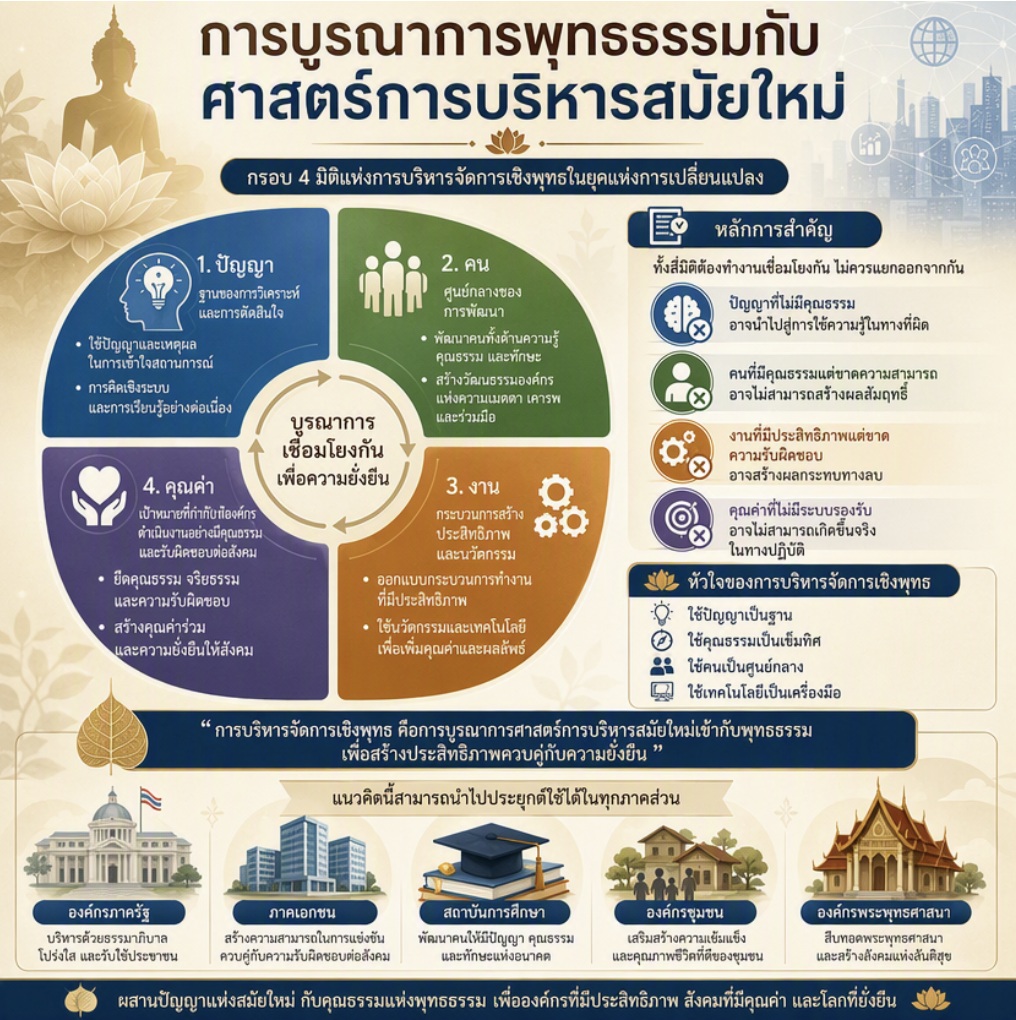
This academic article aims to present the concept of Buddhist management in the context of an era of rapid change. Government, private, civil society, and Buddhist organizations alike face significant economic, social, digital technological, and behavioral shifts. Management in this context cannot focus solely on efficiency, effectiveness, or results, but must also prioritize morality, ethics, quality of life for personnel, social responsibility, and sustainability. The article integrates Buddhist principles with modern management science, considering key Buddhist principles such as the Seven Virtues of a Good Person, the Four Bases of Success (Iddhipada), the Four Sublime States (Brahma Vihara), the Four Principles of Social Harmony (Sanghahavatthu), the Four Biases (Akati), and principles of good governance, as well as strategic management, leadership, human resource management, change management, and digital management. The analysis reveals that Buddhist management does not reject modern management science but complements the values and ethics within the management process, with people, work, and morality being essential components that must be developed simultaneously. Ultimately, managers should be visionary leaders of change, using wisdom in decision-making, mindfulness in management, compassion towards personnel, adherence to principles of righteousness and fairness, and responsible use of technology and innovation. This will lead to efficient, ethical, trustworthy organizations capable of sustainable existence in a constantly changing society.
References
ปรินทร ศิริเอี้ยวพิกูล. (2569) การบริหารทรัพยากรมนุษย์ตามแนวพุทธ. วารสารพุทธจิตวิทยา. 11(3), 635–644.
พระครูวินัยธรบุญธรรม ปุญฺญธมฺโม และคณะ. (2569). ภาวะผู้นำเชิงพุทธกับการบริหารจัดการองค์กร วารสารสหวิทยาการนวัตกรรมปริทรรศน์. 9(2), 327–341.
พระธรรมปิฎก (ป. อ. ปยุตฺโต). (2545). การพัฒนาที่ยั่งยืน. กรุงเทพฯ: ธรรมสภา.
พระพรหมคุณาภรณ์ (ป.อ. ปยุตฺโต). (2559). พุทธธรรม ฉบับปรับขยาย. (พิมพ์ครั้งที่ 45). กรุงเทพฯ: สหธรรมิก.
พระมหาญาณวัฒน์ ฐิตวฑฺฒโน และคณะ. (2563). การบูรณาการหลักพุทธธรรมกับภาวะผู้นำทางวิชาการ. วารสารบวรสหการศึกษาและมนุษยสังคมศาสตร์. 1(1), 48–58.
พระมหาปริญญา เตชปญฺโญ. (2563) ภาวะผู้นำการเปลี่ยนแปลงตามแนวพุทธของผู้บริหาร. วารสารบวรสหการศึกษาและมนุษยสังคมศาสตร์. 1(2), 40–51.
ภัคภพ์ไผทท์ ภคสกุลวงศ์ และคณะ. (2564. การบริหารงานบุคคลตามหลักพุทธธรรมาภิบาลในยุคดิจิทัล. วารสารมหาจุฬาวิชาการ. 8(2), 357–369.
วิเชียร วิทยอุดม. (2554). ทฤษฎีองค์การ : ฉบับแนวใหม่. กรุงเทพฯ: โรงพิมพ์ธนธัชการพิมพ์.
ศศิธร อนันตพันธุ์พงศ์. (2561). ภาวะผู้นำเชิงทศบารมีเพื่อการบริหารการเปลี่ยนแปลงองค์กร. วารสารสหวิทยาการนวัตกรรมปริทรรศน์. 1(1), 44–51.
ศิขริน ชื่นสมบุญ และคณะ. (2568). ภาวะผู้นำเชิงพุทธในองค์กรธุรกิจไทยสมัยใหม่. วารสาร สถาบันวิจัยญาณสังวร มหาวิทยาลัยมหามกุฏราชวิทยาลัย, 16(2), 113–123.
สมคิด บางโม. (2562). องค์การและการจัดการ. (พิมพ์ครั้งที่ 7). กรุงเทพฯ ซีเอ็ดยูเคชั่น.
Downloads
Published
How to Cite
Issue
Section
License
Copyright (c) 2026 Journal Political Science MCU Korat

This work is licensed under a Creative Commons Attribution-NonCommercial-NoDerivatives 4.0 International License.
This article is published under a Creative Commons Attribution-NonCommercial-NoDerivatives 4.0 International License (CC BY-NC-ND 4.0), which allows others to share the article with proper attribution to the authors and prohibits commercial use or modification. For any other reuse or republication, permission from the journal and the authors is required.


