
STRENGTHENING DEMOCRACY THROUGH THE BUDDHIST WAY
Keywords:
Democracy, The Buddhist Way, Buddhist PrinciplesAbstract
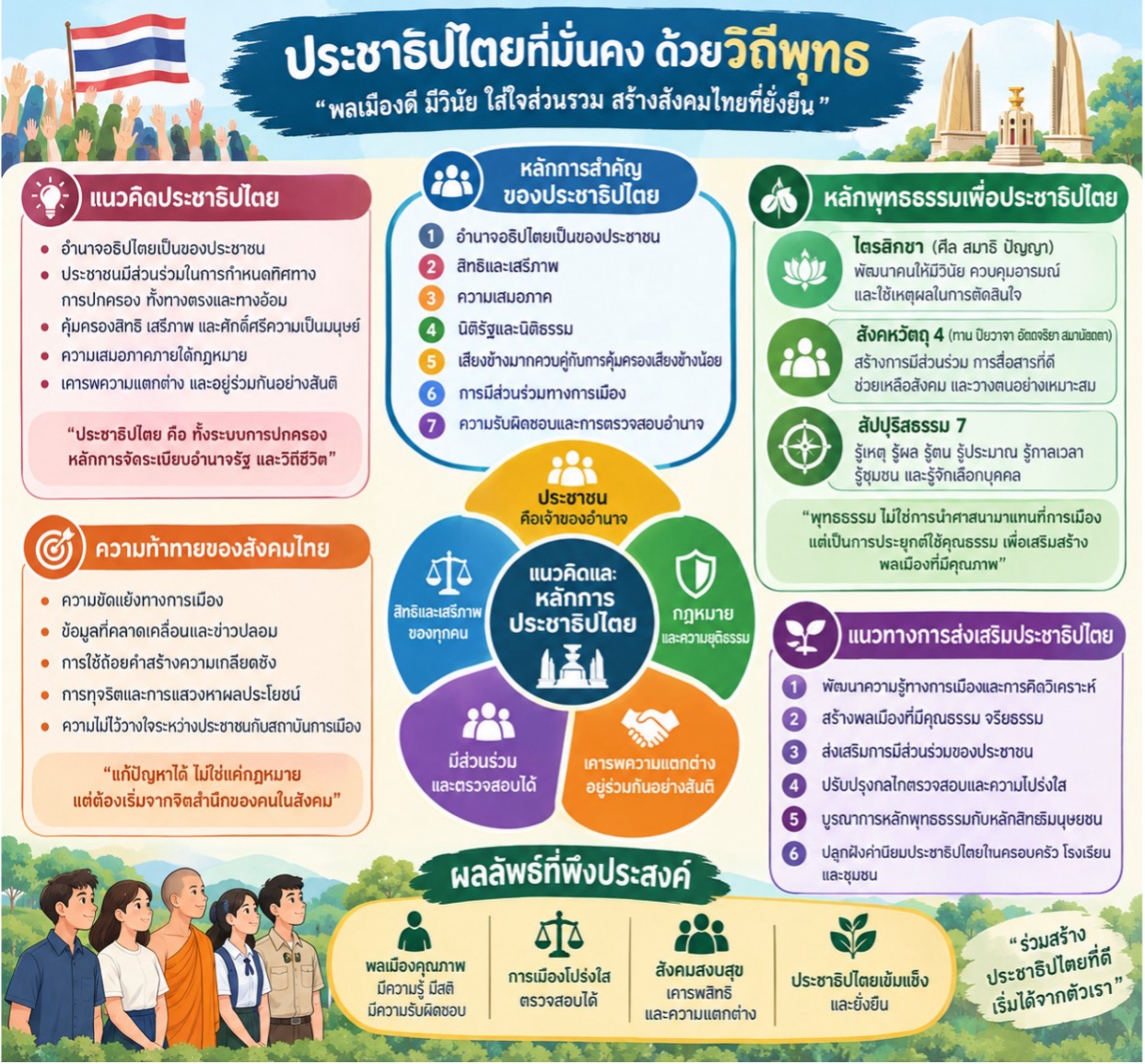
This academic article aims to examine the strengthening of democracy through the Buddhist way of life. It explores democratic concepts and principles, the alignment between Buddhist teachings and the democratic system, and approaches for applying Buddhist principles to foster a stable and sustainable democracy. The study focuses on integrating democratic ideals with specific Buddhist teachings—namely the Ti-sikkhā (Threefold Training), Saṅgahavatthu 4 (Bases of Social Harmony), and Sappurisadhamma 7 (Qualities of a Virtuous Person)—to cultivate citizens who are politically informed, possess moral and ethical integrity, and demonstrate social responsibility. Strengthening democracy requires more than just electoral processes, laws, or mechanisms for checking state power; it necessitates the simultaneous development of the quality of its citizens. Democratic pillars—such as popular sovereignty, rights and freedoms, equality, and the rule of law—serve as the foundation for protecting rights and promoting political participation. Meanwhile, the Ti-sikkhā aids in the development of conduct, the mind, and wisdom; the Saṅgahavatthu 4 fosters constructive communication, mutual support, and a commitment to the common good; and the Sappurisadhamma 7 encourages rational thinking, an understanding of one’s own role within society, and the careful selection of representatives. Thus, strengthening democracy through the Buddhist way of life offers an approach that develops both the political system and the quality of the citizenry, encouraging people to exercise their rights and freedoms responsibly, respect diverse opinions, and verify information before making decisions. and to participate constructively in overseeing the exercise of state power. Furthermore, the application of Buddhist principles must go hand in hand with respect for human rights, equality, the rule of law, and freedom of expression, to build a democratic society that is both fair and peaceful.
Keywords: Democracy; The Buddhist Way; Buddhist Principles
References
ธเนศวร์ เจริญเมือง. (2548). แนวคิดว่าด้วยพลเมือง. กรุงเทพฯ: สถาบันพระปกเกล้า.
ปัญญานันทภิกขุ. (2545). ธรรมะกับการพัฒนาประชาธิปไตย. วารสารธรรมจักรวิทยา, 16(2), 59-70.
พรสันต์ เลี้ยงบุญเลิศชัย. (2560). การเมืองภาคประชาชนกับประชาธิปไตยแบบมีส่วนร่วมในประเทศไทย. กรุงเทพฯ: มหาวิทยาลัยธรรมศาสตร์.
พระครูปลัดสุวัฑฒนพรหมจริยคุณ (คำมาก). (2563). พระพุทธศาสนากับการพัฒนาทางการเมืองการปกครองในสังคมไทย. วารสารปัญญาปณิธาน, 5(1), 1-14.
พระอุดมปัญญาภรณ์. (2565). พระพุทธศาสนากับประชาธิปไตย. วารสาร มจร อุบลปริทรรศน์, 7(2), 221-230.
ลิขิต ธีรเวคิน. (2559). ประชาธิปไตยไทยในทศวรรษใหม่. รุงเทพฯ: สถาบันพระปกเกล้า.
วีระยุทธ กาญจน์ชูฉัตร. (2564). ประชาธิปไตยในความเปลี่ยนแปลง: สังคมไทยกับพลังพลเมือง. กรุงเทพฯ: มหาวิทยาลัยธรรมศาสตร์.
สมชัย ศรีสุทธิยากร. (2549). พระพุทธศาสนากับประชาธิปไตย. วารสารการศึกษาเชิงพุทธ, 7(1), 13-29.
สมเด็จพระอริยวงศาคตญาณ (วาศน์วาสโน). (2528). สังคหวัตถุ 4. กรุงเทพฯ: โรงพิมพ์มหามกุฏราชวิทยาลัย.
สุพจน์ บุญวิเศษ. (2537). หลักรัฐศาสตร์. กรุงเทพฯ: ห้างหุ้นส่วนจํากัด เอ็ม.ที.เพรส.
เอกราช มะลิวรรณ์, วิลาสินี สุขกา และ ปวีณ์กร สุรบรรณ. (2561). ความเป็นพลเมืองตามระบอบประชาธิปไตยของประชาชนในจังหวัดสงขลา. สงขลา: มหาวิทยาลัยเทคโนโลยีราชมงคลศรีวิชัย.
Downloads
Published
How to Cite
Issue
Section
License
Copyright (c) 2026 Journal Political Science MCU Korat

This work is licensed under a Creative Commons Attribution-NonCommercial-NoDerivatives 4.0 International License.
This article is published under a Creative Commons Attribution-NonCommercial-NoDerivatives 4.0 International License (CC BY-NC-ND 4.0), which allows others to share the article with proper attribution to the authors and prohibits commercial use or modification. For any other reuse or republication, permission from the journal and the authors is required.


