
BUDDHA-DHAMMA APPLICATION FOR ENHANCING POLITICAL AWARENESS AMONG CITIZENS AT NGIU SUB-DISTRICT, PAK THONG CHAI DISTRICT, NAKHON RATCHASIMA PROVINCE
Keywords:
Application of Buddhist Principles, Political Perception, The PublicAbstract
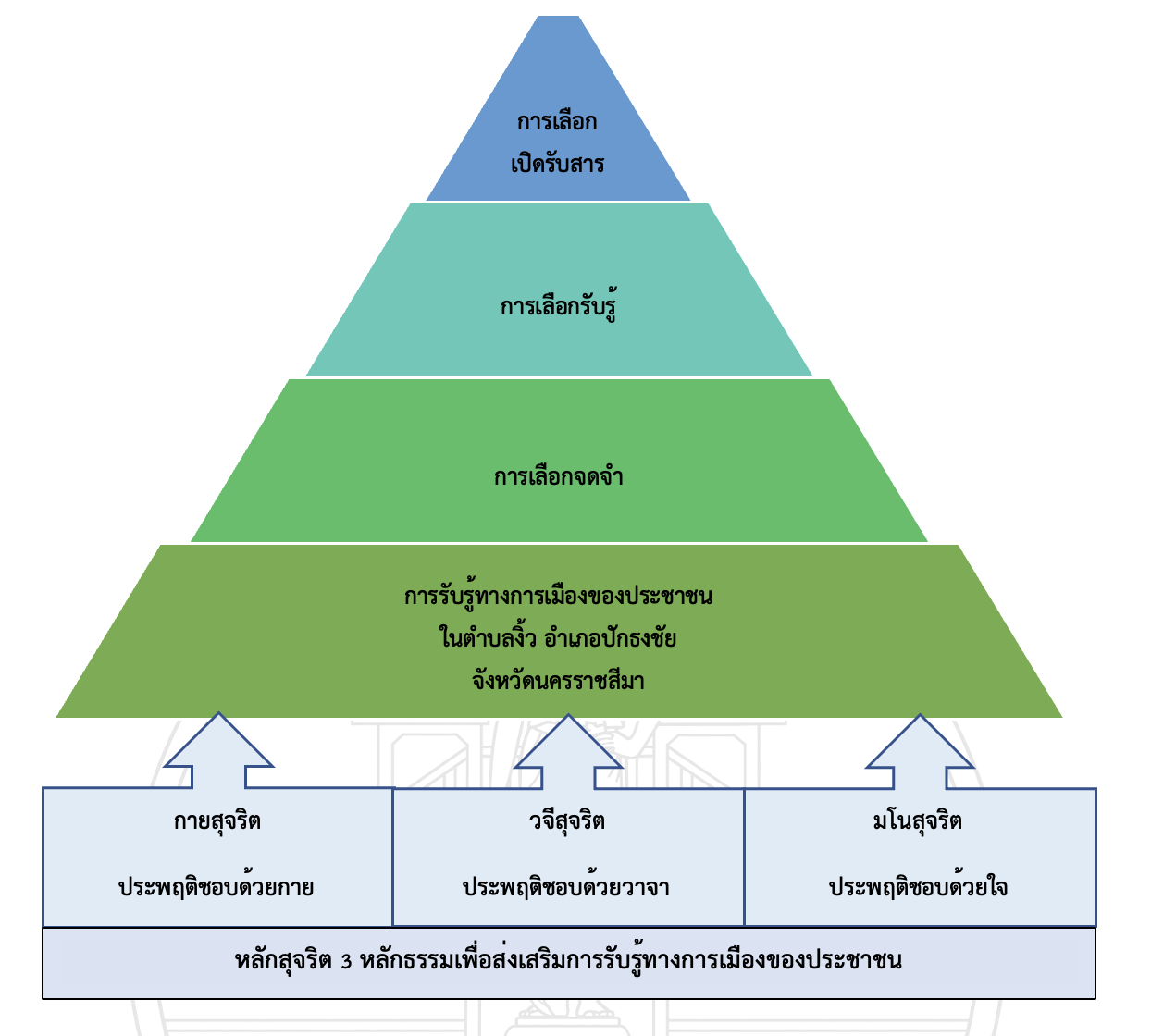
The objectives of this research article were: 1) to study the level of political awareness among the people of Ngiu Subdistrict, Pak Thong Chai District, Nakhon Ratchasima Province; 2) to examine the relationship between the Three Principles of Integrity (*Sujarita 3*) and the political awareness of the people in the same area; and 3) to propose an application of Buddhist principles to promote political awareness among the people of Ngiu Subdistrict, Pak Thong Chai District, Nakhon Ratchasima Province. This study employed a mixed-methods research design. Quantitative research utilized a questionnaire with a reliability coefficient of 0.892, administered to a sample of 299 individuals; data analysis involved frequency, percentage, mean, and standard deviation, with hypothesis testing conducted using Pearson’s correlation coefficient. Qualitative research involved interviewing nine key informants. The research findings revealed that: 1. The overall level of political awareness among the people of Ngiu Subdistrict, Pak Thong Chai District, Nakhon Ratchasima Province, was high. 2. There was a statistically significant positive relationship at the 0.01 level between the Three Principles of Integrity and the political awareness of the people in the area, with a moderate correlation coefficient (R = 0.648**); thus, the research hypothesis was accepted. 3. The application of Buddhist principles to promote political awareness among the people of Ngiu Subdistrict, Pak Thong Chai District Nakhon Ratchasima Province adheres to the three principles of righteous conduct: 1) Righteous bodily conduct-acting appropriately and avoiding political expressions involving violence or unlawful behavior; 2) Righteous verbal conduct-speaking appropriately by upholding truth and factual accuracy when discussing political issues; and 3) Righteous mental conduct-acting with a righteous mindset and sincere intent while consistently following political news and information.
References
จำนงค์ นามมา. (2565). การรับรู้ข้อมูลข่าวสารทางการเมืองผ่านสื่อออนไลน์ของนักศึกษามหาวิทยาลัยมหามกุฏราชวิทยาลัย วิทยาเขตอีสาน ตามหลักโยนิโสมนสิการ. วารสาร มจร อุบลปริทรรศน์, 7(2), 1191–1204.
จิดาภา ยศวิลัย. (2566). ปัจจัยที่ส่งผลต่อการไปใช้สิทธิ์เลือกตั้งสมาชิกสภาผู้แทนราษฎรปี 2562 ของประชาชน เขตบางคอแหลม กรุงเทพมหานคร. สารนิพนธ์รัฐศาสตรมหาบัณฑิต, มหาวิทยาลัยมหาจุฬาลงกรณราชวิทยาลัย.
นันทนา นันทวโรภาส. (2563). พฤติกรรมและวัฒนธรรมทางการเมืองของคนไทย. กรุงเทพฯ: วิญญูชน.
พรทิพย์ อริยเดช. (2554). ปัจจัยที่มีผลต่อการมีส่วนร่วมทางการเมืองของประชาชนในตำบลพังเทียม อำเภอพระทองคำ จังหวัดนครราชสีมา. วิทยานิพนธ์รัฐศาสตรมหาบัณฑิต สาขาวิชารัฐศาสตร์, มหาวิทยาลัยสุโขทัยธรรมาธิราช.
พรรชรนันท์ สายจันดี และคณะ. (2565). การรับรู้ทางการเมือง การกล่อมเกลาทางการเมือง และการมีส่วนร่วมทางการเมืองของเยาวชนในประเทศไทย. วารสารพุทธปรัชญาวิวัฒน์, 6(2), 26–40.
พรรณี ปิติสุทธิธรรม. (2562). การมีส่วนร่วมทางการเมืองของประชาชนระดับท้องถิ่น. วารสารสังคมศาสตร์ มหาวิทยาลัยขอนแก่น, 14(1), 45–62.
พระพรหมคุณาภรณ์ (ป. อ. ปยุตฺโต). (2560). พุทธธรรม (พิมพ์ครั้งที่ 22). มหามกุฏราชวิทยาลัย.
พระมานะ อภิวฑฺฒโน (ยืนยง). (2566). การประยุกต์หลักสุจริตธรรมเพื่อส่งเสริมพฤติกรรมการเลือกตั้งระดับท้องถิ่น ในตำบลบางสีทอง อำเภอบางกรวย จังหวัดนนทบุรี. สารนิพนธ์รัฐศาสตรมหาบัณฑิต สาขาวิชารัฐศาสตร์, มหาวิทยาลัยมหาจุฬาลงกรณราชวิทยาลัย.
พิภูษณ มากไชย. (2563). การนำหลักสุจริต 3 ไปใช้ในการปฏิบัติงานของข้าราชการตำรวจสถานีตำรวจภูธรเมืองภูเก็ต จังหวัดภูเก็ต. สารนิพนธ์รัฐศาสตรมหาบัณฑิต สาขาวิชารัฐศาสตร์การปกครอง, มหาวิทยาลัยมหามกุฏราชวิทยาลัย.
รุ่งนภา จงสุขชัย. (2561). คุณธรรมกับการเมืองไทยในยุคสื่อดิจิทัล. วารสารวิชาการมนุษยศาสตร์และสังคมศาสตร์, 16(2), 120–135.
สำเริง ราชฉวาง. (2566). การรับรู้ทางการเมืองของประชาชนที่มีผลต่อการออกไปใช้สิทธิ์เลือกตั้งสมาชิกสภากรุงเทพมหานคร เขตคลองสามวา กรุงเทพมหานคร. สารนิพนธ์รัฐศาสตรมหาบัณฑิต สาขาวิชารัฐศาสตร์, มหาวิทยาลัยมหาจุฬาลงกรณราชวิทยาลัย.
สิทธิพันธ์ พุทธหน. (2554). ทฤษฎีพัฒนาการเมือง. กรุงเทพฯ: สำนักพิมพ์มหาวิทยาลัยรามคำแหง.
เสาวนุช ศิริมาลัยรักษ์. (2560). ศึกษาความสำคัญของสุจริต 3 ต่อการปฏิบัติวิปัสสนาภาวนา. สารนิพนธ์พุทธศาสตรมหาบัณฑิต สาขาวิชาวิปัสสนาภาวนา, มหาวิทยาลัยมหาจุฬาลงกรณราชวิทยาลัย.
องค์การบริหารส่วนตำบลงิ้ว. (2568). ประชากรที่มีสิทธิ์เลือกตั้งในองค์การบริหารส่วนตำบลงิ้ว อำเภอปักธงชัย จังหวัดนครราชสีมา ปี 2568. https://election.pptvhd36.com/region/2/23
อธิติยา อัชชาศัย. (2567). การประยุกต์หลักสุจริตธรรมเพื่อส่งเสริมการไปใช้สิทธิเลือกตั้งท้องถิ่นของประชาชนในเขตเทศบาลนครระยอง จังหวัดระยอง. วารสารสหวิทยาการนวัตกรรมปริทรรศน์, 7(6), 248–260.
อัญชุลี วงษ์บุญงาม และดารณี ธัญญูสิริ. (2554). การเปิดรับข่าวสารทางการเมือง ความรู้ และการมีส่วนร่วมทางการเมืองของนักศึกษามหาวิทยาลัยเทคโนโลยีราชมงคลในเขตกรุงเทพมหานคร. รายงานวิจัย, มหาวิทยาลัยเทคโนโลยีราชมงคลพระนคร.
Yamane, T. (1973). Statistics: An Introductory Analysis (3rd ed.). New York: Harper and Row.
Downloads
Published
How to Cite
Issue
Section
License
Copyright (c) 2026 Journal Political Science MCU Korat

This work is licensed under a Creative Commons Attribution-NonCommercial-NoDerivatives 4.0 International License.
This article is published under a Creative Commons Attribution-NonCommercial-NoDerivatives 4.0 International License (CC BY-NC-ND 4.0), which allows others to share the article with proper attribution to the authors and prohibits commercial use or modification. For any other reuse or republication, permission from the journal and the authors is required.


