
BUDDHA-DHAMMA INTEGRATION FOR REDUCING RECIDIVISM AMONG INMATES IN NAKHON RATCHASIMA CENTRAL PRISON
Keywords:
Integration of Buddhist Principles, Reduction of Recidivism, Nakhon Ratchasima Central PrisonAbstract
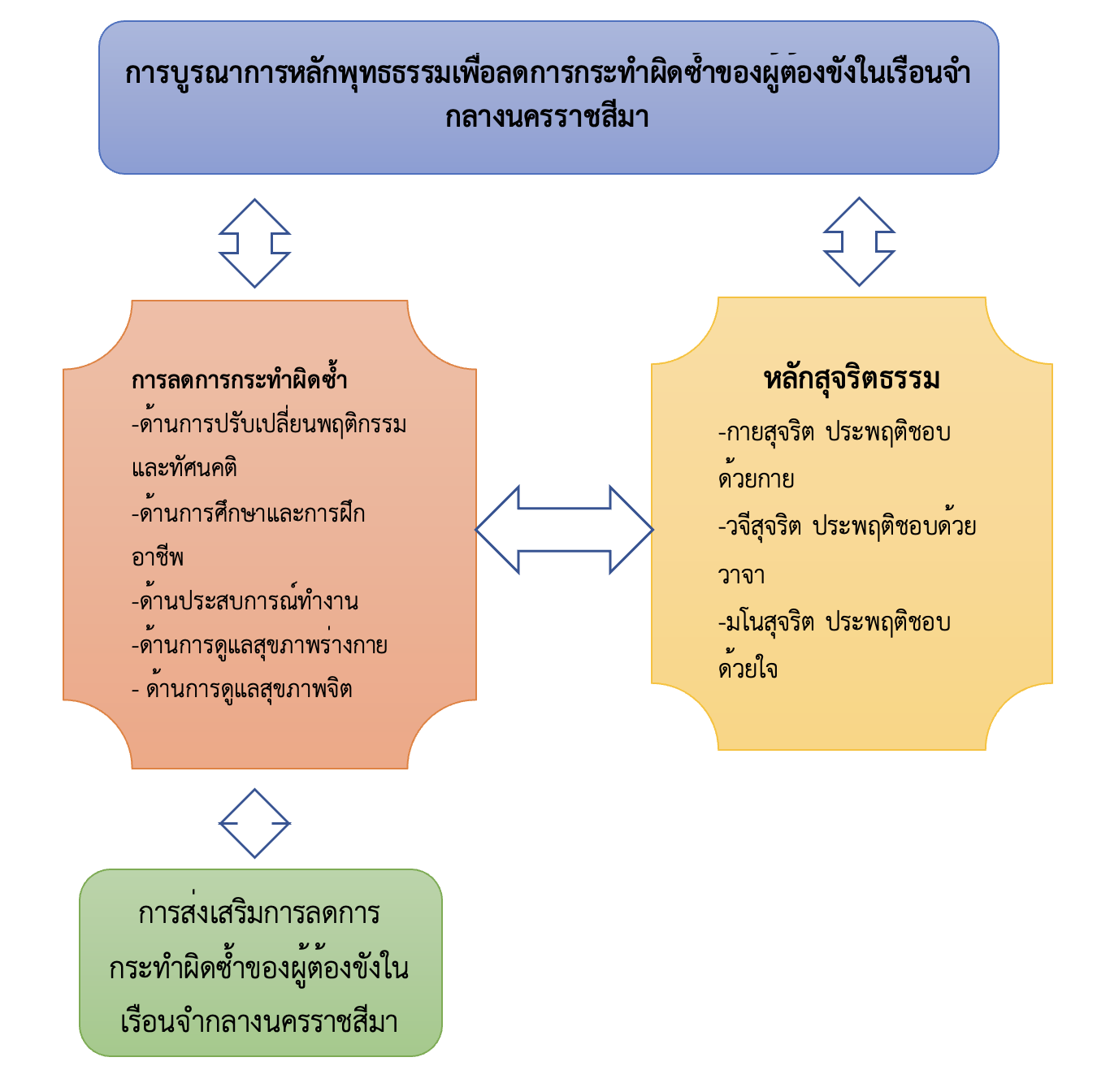
The objectives of this research were: 1) to study the level of recidivism reduction among inmates at Nakhon Ratchasima Central Prison; 2) to examine the relationship between the principle of Sujarit-dhamma (virtuous conduct/integrity) and the reduction of recidivism among inmates at Nakhon Ratchasima Central Prison; and 3) to integrate Buddhist principles to reduce recidivism among inmates at Nakhon Ratchasima Central Prison. This study employed a mixed-methods research design. Quantitative data were collected using a questionnaire with a reliability coefficient of 0.912 from a sample of 100 individuals. Statistical analyses included frequency, percentage, mean, standard deviation, and Pearson correlation analysis. Additionally, in-depth interviews were conducted with nine key informants. The research findings revealed that: 1) the overall level of recidivism reduction among inmates at Nakhon Ratchasima Central Prison was moderate (mean = 3.46); 2) there was a statistically significant moderate positive correlation (R=0.761**, p < 0.01) between the principle of Sujarit-dhamma and the reduction of recidivism among inmates at Nakhon Ratchasima Central Prison, thereby confirming the research hypothesis; and 3) the integration of Buddhist principles to reduce recidivism among inmates at Nakhon Ratchasima Central Prison included Kaya-sujarit (virtuous bodily conduct), specifically the consistent participation in inmate behavioral rehabilitation activities. Maintain order and safety within the controlled area. 2) Right Speech: Offer words of encouragement to inmates who wish to reform; use polite language when issuing warnings or making decisions; and communicate straightforwardly without distorting the truth. 3) Right Intention: Harbor feelings of compassion and goodwill toward all inmates; maintain a genuine commitment to the continuous rehabilitation of inmates' behavior; and avoid prejudice or discriminatory treatment.
References
กรมราชทัณฑ์. (2566). รายงานสถิติจำนวนผู้ต้องขังและอัตราการกระทำผิดซ้ำ. กรุงเทพฯ: กรมราชทัณฑ์.
กลุ่มพัฒนาระบบบริหาร (กพร.) กรมราชทัณฑ์. (2564). รวมพลังขับเคลื่อน 8 มิติยกระดับสร้างความเปลี่ยนแปลง. นนทบุรี: กลุ่มพัฒนาระบบบริหาร (กพร.) กรมราชทัณฑ์.
ทรรศพล ขุนรัง. (2556). สาเหตุการกระทำผิดซ้ำคดีเกี่ยวกับทรัพย์: ศึกษาเฉพาะกรณีความผิดฐานลักทรัพย์นักโทษเด็ดขาดฝ่ายควบคุมแดน 8 เรือนจำพิเศษกรุงเทพมหานคร. วิทยานิพนธ์รัฐประศาสนศาสตรมหาบัณฑิต สาขาวิชารัฐประศาสนศาสตร์. บัณฑิตวิทยาลัย: มหาวิทยาลัยเกริก.
พรกมล ยังดี และคณะ. (2568). ปัจจัยและแนวทางการป้องกันการกระทำผิดซ้ำในผู้ต้องขังคดียาเสพติด กรณีศึกษาจากเรือนจำกลางนครปฐมและเรือนจำกลางบางขวาง. วารสารนวัตกรรมการศึกษาและการวิจัย, 9(1), 75-89.
พระมานะ อภิวฑฺฒโน (ยืนยง). (2566). การประยุกต์หลักสุจริตธรรมเพื่อส่งเสริมพฤติกรรมการเลือกตั้งระดับท้องถิ่นในตำบลบางสีทอง อำเภอบางกรวย จังหวัดนนทบุรี. สารนิพนธ์ศาสนศาสตรมหาบัณฑิต สาขาวิชารัฐศาสตร์. บัณฑิตวิทยาลัย: มหาวิทยาลัยมหาจุฬาลงกรณราชวิทยาลัย.
ภานุวัฒน์ มีเพียร และบุญเหลือ บุบผามาลา. (2565). ปัจจัยที่ทำให้มีการกระทำผิดซ้ำในคดียาเสพติดของผู้ต้องขังเรือนจำกลางอุดรธานี. Journal of Roi Kaensarn Academi, 7(2), 17-32.
วรรณา อินทร์จันทร์. (2564). การพัฒนาคุณธรรมจริยธรรมของผู้ต้องขังผ่านกิจกรรมธรรมะในเรือนจำ. วารสารการบริหารและพัฒนา, 13(1), 99–114.
วีระชัย เหล่าลงอินทร์ และคณะ. (2552). การกระทำผิดซ้ำของผู้ต้องขังในเรือนจำจังหวัดมหาสารคาม. วารสารมหาวิทยาลัยราชภัฏมหาสารคาม, 3(1), 29-38.
สำนักงานคณะกรรมการพัฒนาระบบราชการ. (2563). คู่มือหลักสุจริต 3 เพื่อส่งเสริมคุณธรรมของข้าราชการ. กรุงเทพฯ: สำนักงานคณะกรรมการพัฒนาระบบราชการ.
อธิติยา อัชชาศัย. (2567). การประยุกต์หลักสุจริตธรรมเพื่อส่งเสริมการไปใช้สิทธิเลือกตั้งท้องถิ่นของประชาชนในเขตเทศบาลนครระยอง จังหวัดระยอง. วารสารสหวิทยาการนวัตกรรมปริทรรศน์, 7(6), 248-260.
Cullen, F.T. & Gendreau, P. (2000). Assessing Correctional Rehabilitation: Policy, Practice, and Prospects. Criminal Justice, 3(2), 109–175.
Yamane, T. (1973). Statistics: An Introductory Analysis (3rd ed.). New York: Harper and Row.
Downloads
Published
How to Cite
Issue
Section
License
Copyright (c) 2026 Journal Political Science MCU Korat

This work is licensed under a Creative Commons Attribution-NonCommercial-NoDerivatives 4.0 International License.
This article is published under a Creative Commons Attribution-NonCommercial-NoDerivatives 4.0 International License (CC BY-NC-ND 4.0), which allows others to share the article with proper attribution to the authors and prohibits commercial use or modification. For any other reuse or republication, permission from the journal and the authors is required.


