
BUDDHA-DHAMMA INTEGRATION TO ENHANCE WORK PERFORMANCE OF PRISON GATE OFFICERS IN NAKHON RATCHASIMA CENTRAL PRISON
Keywords:
Integrative Buddhism, Participation, Community MakingAbstract
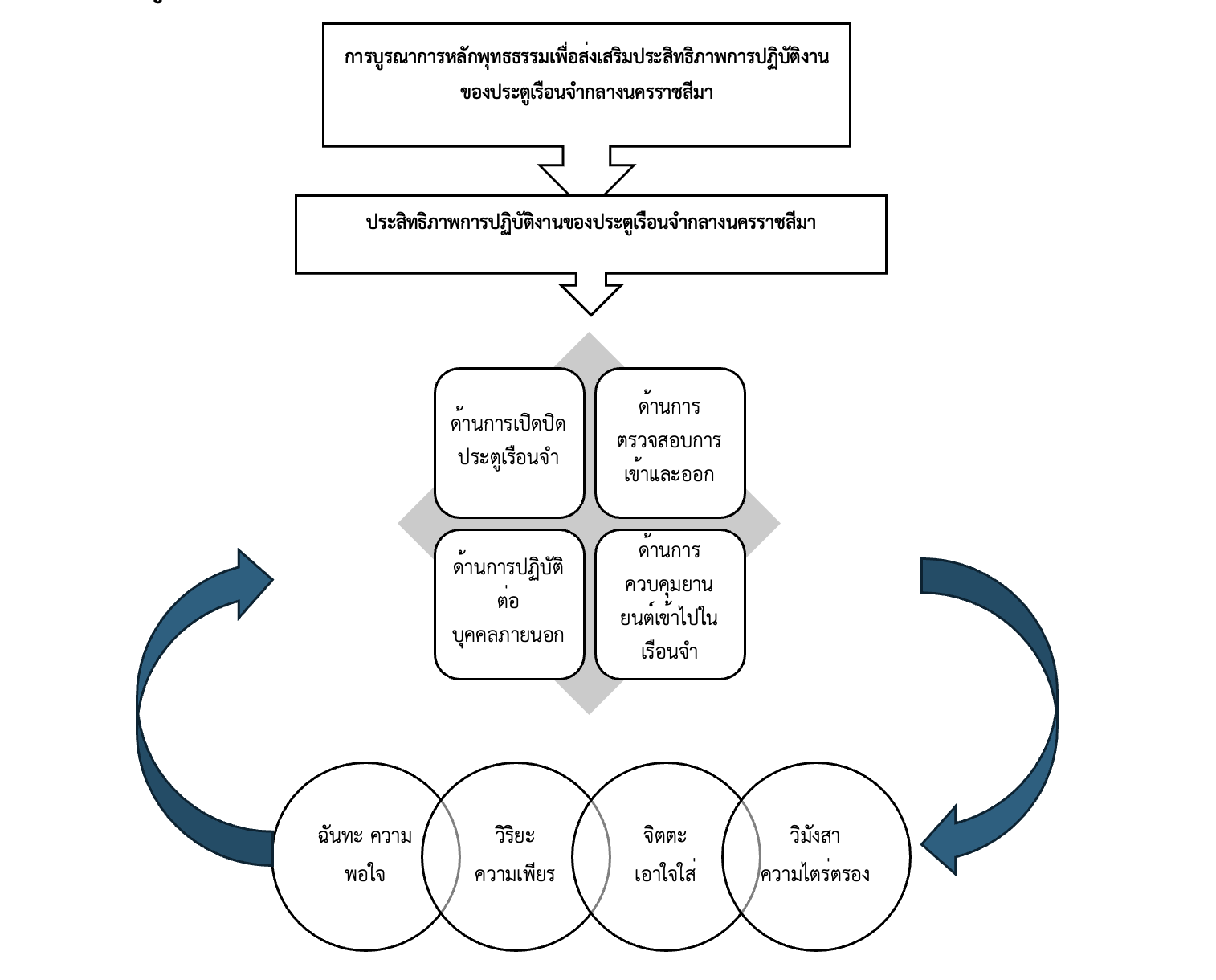
This research aims to 1) study the level of efficiency, 2) study the relationship between the Four Noble Truths (Iddhipada 4) and efficiency, and 3) to propose the integration of Buddhist principles to enhance the work efficiency of the gatekeepers at Nakhon Ratchasima Central Prison. The research employed a mixed-methods approach. Quantitative research used a questionnaire with a reliability coefficient of 0.779 and a sample of 100 people. Statistical analyses included frequency, percentage, mean, standard deviation, F-test, one-way ANOVA, and interviews with nine key informants. The research findings revealed that: 1. The overall work efficiency of the gatekeepers at Nakhon Ratchasima Central Prison was high ( =4.33). 2. The overall relationship between the Four Noble Truths (Iddhipada 4) and the work efficiency of the gatekeepers at Nakhon Ratchasima Central Prison showed a strong positive correlation (R=0.783**), thus accepting the research hypothesis. 3. The integration of Buddhist principles to enhance the work efficiency of the gatekeepers at Nakhon Ratchasima Central Prison revealed that 1) Chanda, which is love and pride in their frontline role, was key. This involves: 1) A shift in attitude from coercion to service out of love; 2) Diligence: Perseverance in continuously developing search skills and situational analysis; 3) Concentration: Focused attention to duty at strategic entry and exit points where errors are unacceptable; and 4) Reflection: Careful consideration and deliberation in work to prevent unforeseen incidents. Integrating these principles not only creates discipline and security within the prison but also molds officers to let go of prejudice and perform their duties with happiness, mindfulness, and maximum efficiency for the sustainable benefit of the organization.
References
กรมราชทัณฑ์. (2565). คู่มือการปฏิบัติงานสำหรับเจ้าหน้าที่เรือนจำ. กรุงเทพมหานคร : สำนักงานกิจการเรือนจำ.
สุภกิจ เจริญเวชและคณะ. (2556). คู่มือ การประเมินผลการปฏิบัติราชการ ตามมาตรการปรับปรุงประสิทธิภาพในการปฏิบัติราชการ ประจำปีงบประมาณ พ.ศ. 2566 ระดับเรือนจำ/ทัณฑสถาน/สถานกักขัง/สถานกักกัน. นนทบุรี : กลุ่มพัฒนาระบบบริหาร กรมราชทัณฑ์.
มณฑล ขันกสิกรรม (2554). “ปัจจัยความสำเร็จในการบริหารระบบการควบคุมผู้ต้องขังในเรือนจำและทัณฑสถาน เขต 6”. วิทยานิพนธ์รัฐประศาสนศาสตรมหาบัณฑิต สาขาวิชาวิทยาการจัดการ มหาวิทยาลัยสุโขทัยธรรมาธิราช. บัณฑิตวิทยาลัย : มหาวิทยาลัยสุโขทัยธรรมาธิราช.
มหาจุฬาลงกรณราชวิทยาลัย. (2539). พระไตรปิฎกภาษาไทย ฉบับมหาจุฬาลงกรณราชวิทยาลัย. กรุงเทพมหานคร : โรงพิมพ์มหาจุฬาลงกรณราชวิทยาลัย.
เรือนจำกลางนครราชสีมา. (2568). รายชื่อบุคลากรเรือนจำกลางนครราชสีมา ปี 2568. นครราชสีมา : เรือนจำกลางนครราชสีมา.
จ่าสิบเอกธงชัย ทองคำ. (2563). “ปัจจัยที่ส่งผลต่อคุณภาพชีวิตของผู้ต้องขังเรือนจาจังหวัดมหาสารคาม”. วิทยานิพนธ์ปริญญารัฐประศาสนศาสตรมหาบัณฑิต สาชาชาวิชารัฐประศาสนศาสตร์. บัณฑิตวิทยาลัย : มหาวิมหาวิทยาลัยราชภัฏมหาสารคาม.
กองบริหารทรัพยากรบุคคล กรมราชทัณฑ์. (2562). การบริหารจัดการบุคลากรกรมราชทัณฑ์ที่มีพฤติกรรมไม่เหมาะสม. กองบริหารทรัพยากรบุคคล กรมราชทัณฑ์ : กรมราชทัณฑ์.
คมสัน สุขฤทธิ์และคณะ. (2564). “คุณภาพชีวิตการทำงานของเจ้าหน้าที่ราชทัณฑ์เขต 4”. การประชุมวิชาการระดับชาติด้านการบริหารกิจการสาธารณะยุคดิจิทัล ครั้งที่ 5. บัณฑิตวิทยาลัย : วิทยาลัยนวัตกรรม มหาวิทยาลัยเทคโนโลยีราชมงคลรัตนโกสินทร์.
กองการเจ้าหน้าที่ กรมราชทัณฑ์. (2559). การประเมินความผาสุกและความผูกพันต่อองค์กรของบุคลากรกรมราชทัณฑ์. กองการเจ้าหน้าที่ กรมราชทัณฑ์ : กรมราชทัณฑ์.
กองบริหารทรัพยากรบุคคล กรมราชทัณฑ์. (2561). ค่านิยมที่ส่งผลต่อการปฏิบัติงานของบุคลากรกรมราชทัณฑ์. กองบริหารทรัพยากรบุคคล กรมราชทัณฑ์ : กรมราชทัณฑ์.
วสันต์ โพธิ์วิทูล. (2568). “การประยุกต์หลักพรหมวิหารธรรมเพื่อส่งเสริมบทบาทเจ้าพนักงานเรือนจำในการปกครองผู้ต้องขังเรือนจำ ทัณฑสถาน ในอำเภอสีคิ้ว จังหวัดนครราชสีมา”. สารนิพนธ์รัฐศาสตรมหาบัณฑิต สาขาวิชารัฐศาสตร์. บัณฑิตวิทยาลัย : มหาวิทยาลัยมหาจุฬาลงกรณราชวิทยาลัย.
Yamane, T. (1973). Statistics: An Introductory Analysis (3rd ed.). New York: Harper and Row.
Downloads
Published
How to Cite
Issue
Section
License
Copyright (c) 2026 Journal Political Science MCU Korat

This work is licensed under a Creative Commons Attribution-NonCommercial-NoDerivatives 4.0 International License.
This article is published under a Creative Commons Attribution-NonCommercial-NoDerivatives 4.0 International License (CC BY-NC-ND 4.0), which allows others to share the article with proper attribution to the authors and prohibits commercial use or modification. For any other reuse or republication, permission from the journal and the authors is required.


