
GUIDELINES FOR DEVELOPING POLITICAL TRUST AMONG THAI POLITICIANS
Keywords:
Political Trust, Thai Politicians, TransparencyAbstract
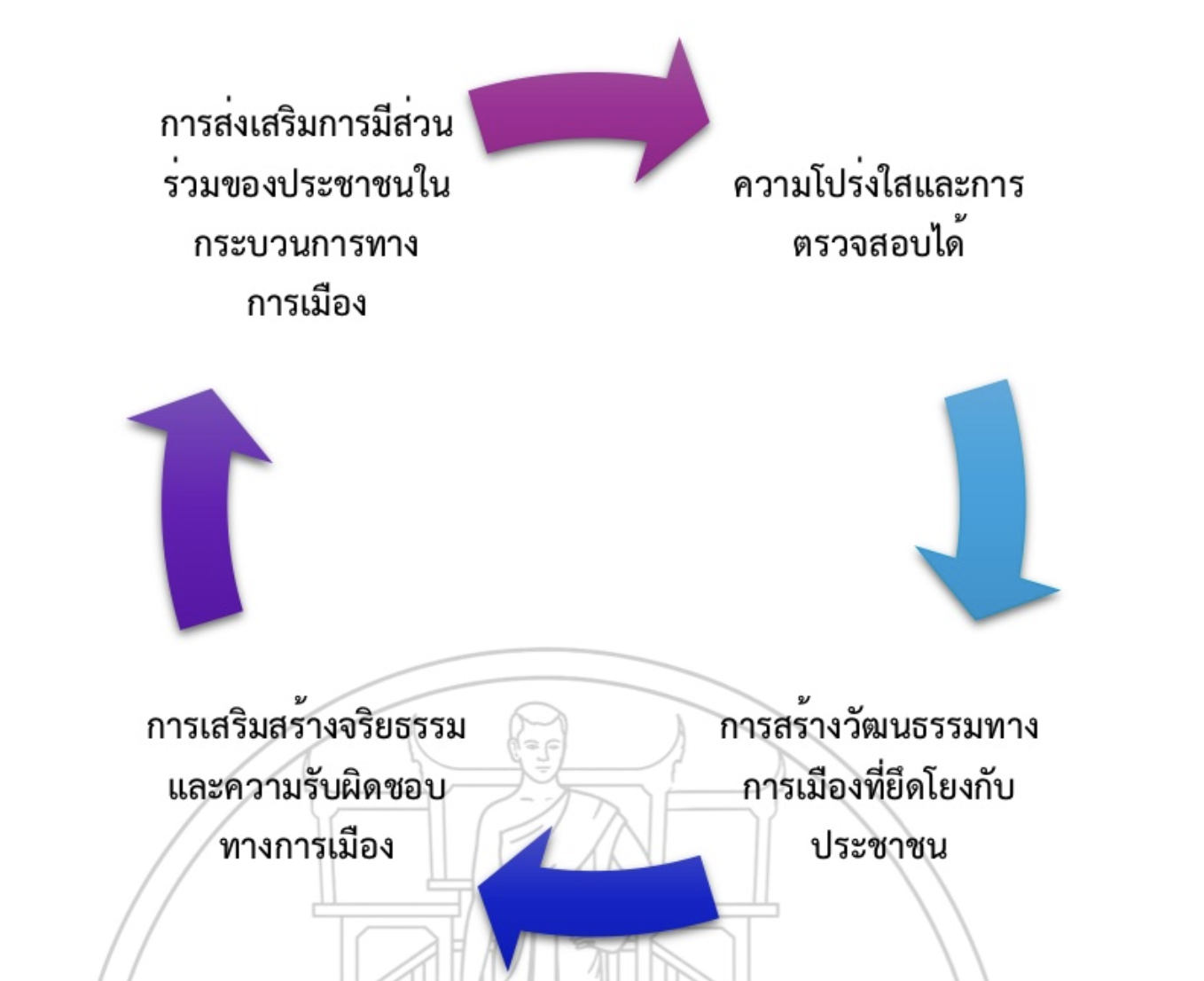
Political trust is an important factor that determines the stability of a democracy and is an indicator of the quality of the relationship between citizens and politicians. This study aims to analyze the factors affecting political trust in the Thai context and propose guidelines for developing such trust. The preliminary results of the study found that Thai citizens’ political distrust is rooted in various factors, such as patronage culture, structural corruption, lack of transparency in policy implementation, and lack of connection between politicians and citizens. Therefore, building political trust must be carried out systematically through various mechanisms, including promoting transparency and accountability, developing political communication capacity that emphasizes sincerity and citizen participation, fostering ethics and good governance among politicians, and developing political structures that support citizens’ continuous participation in the policy process. The expected outcome is the strengthening of democracy and the long-term narrowing of the gap between the state and citizens.
References
ชัยอนันต์ สมุทวณิช. (2543). การเมืองไทย: ความเปลี่ยนแปลงและการพัฒนา. กรุงเทพฯ: สำนักพิมพ์มติชน.
ปรีดี หงษ์สต้น. (2553). จริยธรรมทางการเมือง: แนวคิดและการประยุกต์ใช้. กรุงเทพฯ: ศูนย์วิจัยและพัฒนาการเมืองและธรรมาภิบาล.
ศุภมิตร ปิติพัฒน์. (2561). ประชาธิปไตยกับการเมืองไทย. กรุงเทพฯ: สำนักพิมพ์มหาวิทยาลัยธรรมศาสตร์.
สมชาย ปรีชาศิลปกุล. (2560). การเมืองไทยกับระบอบนายทุน. กรุงเทพฯ: สำนักพิมพ์ฟ้าเดียวกัน.
สมบัติ ธำรงธัญวงศ์. (2559). การเมืองไทย. กรุงเทพฯ: คณะรัฐประศาสนศาสตร์ สถาบันบัณฑิตพัฒนบริหารศาสตร์.
อุกฤษ มงคลนาวิน. (2547). ประชาธิปไตยกับการพัฒนาการเมืองไทย. กรุงเทพมหานคร: วิญญูชน.
Almond, Gabriel A., and Sidney Verba. (1963). The Civic Culture: Political Attitudes and Democracy in Five Nations. Princeton: Princeton University Press.
Archon Fung. (2004). Empowered Participation: Reinventing Urban Democracy. Princeton: Princeton University Press.
Beth Simone Noveck. (2015). Smart Citizens, Smarter State: The Technologies of Expertise and the Future of Governing. Cambridge, MA: Harvard University Press.
Fukuyama, Francis. (1995). Trust: The Social Virtues and the Creation of Prosperity. New York: Free Press.
Hardin, Russell. (2002). Trust and Trustworthiness. New York: Russell Sage Foundation.
Joseph S. Nye. (1997). Understanding International Conflicts: An Introduction to Theory and History. New York: Longman.
Kevin Hewison. (2015). Political Economy and the Persistence of Corruption in Thailand. London: Routledge.
Larry Diamond and Leonardo Morlino. (2005). The Quality of Democracy: An Overview. Oxford: Oxford University Press.
Nye, Joseph S. (1997). The Decline of Confidence in Government. Washington D.C.: The Brookings Institution.
Pasuk Phongpaichit and Chris Baker. (2004). Thaksin: The Business of Politics in Thailand. Copenhagen: NIAS Press.
Pasuk Phongpaichit and Sungsidh Piriyarangsan. (1994). Corruption and Democracy in Thailand. Chiang Mai: Silkworm Books.
Putnam, Robert D. (2000). Bowling Alone: The Collapse and Revival of American Community. New York: Simon & Schuster.
Russell Hardin. (2002). Trust and Trustworthiness. New York: Russell Sage Foundation.
Susan Rose-Ackerman. (1999). Corruption and Government: Causes, Consequences, and Reform. Cambridge: Cambridge University Press.
Downloads
Published
How to Cite
Issue
Section
License
Copyright (c) 2026 Journal Political Science MCU Korat

This work is licensed under a Creative Commons Attribution-NonCommercial-NoDerivatives 4.0 International License.
This article is published under a Creative Commons Attribution-NonCommercial-NoDerivatives 4.0 International License (CC BY-NC-ND 4.0), which allows others to share the article with proper attribution to the authors and prohibits commercial use or modification. For any other reuse or republication, permission from the journal and the authors is required.


