
BUDDHIST METHODS TO STRENGTHEN DEMOCRATIC CITIZENSHIP AMONG THE PUBLIC SECTOR OF NAKHON RATCHASIMA MUNICIPALITY
Keywords:
Citizenship, Democracy, Bases of SympathyAbstract
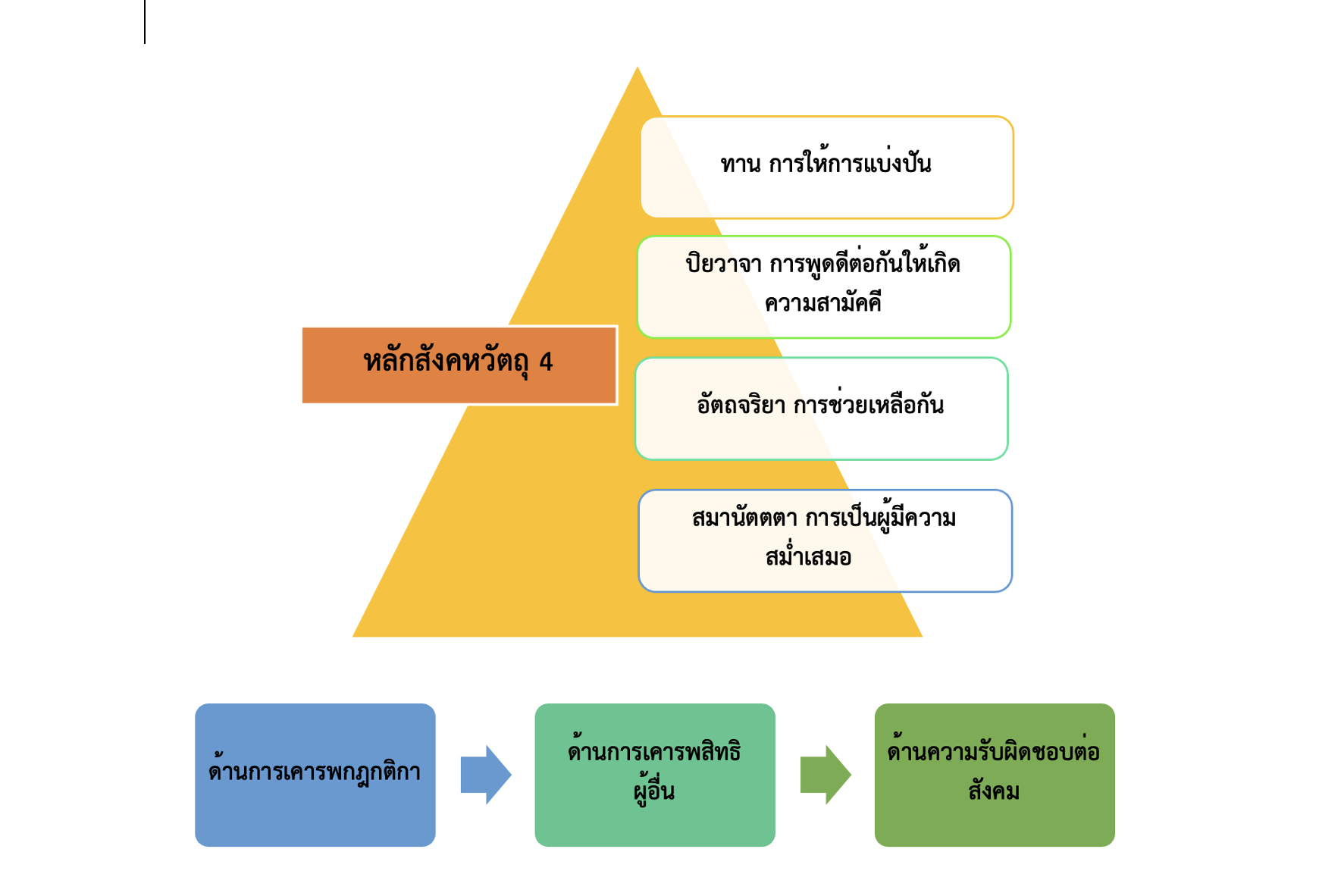
This research aims to 1) study the level of democratic citizenship promotion among the public sector in Nakhon Ratchasima Municipality, 2) compare public opinion on democratic citizenship promotion among the public sector in Nakhon Ratchasima Municipality categorized by personal factors, and 3) propose Buddhist methods for promoting democratic citizenship among the public sector in Nakhon Ratchasima Municipality. This research employed a mixed-methods approach. Quantitative data was collected using a questionnaire with a reliability coefficient of 0.809 from a sample of 400 people. Statistical analyses included frequency, percentage, mean, standard deviation F-test, one-way ANOVA, and in-depth interviews with 9 key informants. The research findings revealed that: 1. The overall level of democratic citizenship promotion among the public sector in Nakhon Ratchasima Municipality was high ( =3.92). 2. Comparing public opinion on democratic citizenship promotion among the public sector in Nakhon Ratchasima Municipality, there were no significant overall differences in opinions among people based on gender, age, education level, occupation, and monthly income. Therefore, the initial hypothesis is rejected. 3. The Buddhist methods for fostering democratic citizenship among the public sector in Nakhon Ratchasima Municipality were found to be tools for refining behavior and mindset through: 1) Dana (giving), sharing, and sacrificing personal gain for the common good; 2) Piyavaca (kind speech), speaking kindly to each other to create unity, and being open-minded in listening to differing opinions with polite and respectful language; 3) Atthacariya (helping each other), which helps create an atmosphere of unity in the locality; and 4) Samanattata (consistency), being consistent and continuously performing one's duties under equal ethical standards.
References
ญาณิศา กุเวรไตรย์. (2566). บทบาทของสตรีในการมีส่วนร่วมทางการเมืองในอำเภอสีคิ้ว จังหวัดนครราชสีมา. วิทยานิพนธ์รัฐศาสตรมหาบัณฑิต. บัณฑิตวิทยาลัย: มหาวิทยาลัยมหาจุฬาลงกรณราชวิทยาลัย.
ปกิจ พรรัตนานุกูล. (2564). ความเข้าใจทางการเมืองในระบอบประชาธิปไตยของประชาชนในเทศบาลนครปากเกร็ด จังหวัดนนทบุรี. สารนิพนธ์รัฐศาสตรมหาบัณฑิต. บัณฑิตวิทยาลัย: มหาวิทยาลัยมหาจุฬาลงกรณราชวิทยาลัย.
ปรมต วรรณบวร และคณะ. (2560). ความเป็นพลเมืองเพื่อการส่งเสริมประชาธิปไตยในท้องถิ่น. วารสาร มจร สังคมศาสตร์ปริทรรศน์, 6(2), 85-100.
ปริญญา เทวานฤมิตรกุล. (2555). การศึกษาเพื่อสร้างพลเมือง. กรุงเทพฯ: นามมีบุ๊คส์พับลิเคชั่น.
พระชิศนุพงศ์ วชิรญาโณ. (2567). การส่งเสริมภาวะผู้นำตามหลักพุทธธรรมสำหรับนักการเมืองท้องถิ่นในอำเภอคง จังหวัดนครราชสีมา. วิทยานิพนธ์รัฐศาสตรมหาบัณฑิต. บัณฑิตวิทยาลัย: มหาวิทยาลัยมหาจุฬาลงกรณราชวิทยาลัย.
พระมหาธนาธิป สีลสุทฺโธ. (2567). การประยุกต์หลักปัญญาธรรมเพื่อเสริมสร้างความรู้ความเข้าใจทาง การเมืองในระบอบประชาธิปไตยของประชาชน ตำบลบ้านนา อำเภอแกลง จังหวัดระยอง. สารนิพนธ์รัฐศาสตรมหาบัณฑิต. บัณฑิตวิทยาลัย: มหาวิทยาลัยมหาจุฬาลงกรณราชวิทยาลัย.
มงคลกิตติ์ โวหารเสาวภาคย์ และชลธิชา จิรภัคพงศ์. (2568). ความเป็นพลเมือง. เข้าถึงได้จาก https://acd.mcu.ac.th/wp-content/plugins/download-attachments/includes/download.php?id=16 48. สืบค้นเมื่อ 10 มกราคม 2569.
เลิสพร อุดมพงษ์. (2557). การศึกษาเพื่อความเป็นพลเมืองในการส่งเสริมบทบาทของประชาชนในระบอบการเมืองแบบผู้แทน: ประสบการณ์อันยั่งยืนจากต่างประเทศ. กรุงเทพฯ: สำนักวิจัยและพัฒนา สถาบันพระปกเกล้า.
อาทิตย์ ชูชัย และคณะ. (2564). บทบาทการส่งเสริมวัฒนธรรมทางการเมืองแบบประชาธิปไตย ของคณาจารย์ มหาวิทยาลัยมหามกุฏราชวิทยาลัย. วารสาร มจร สังคมศาสตร์ปริทรรศน์, 10(3), 335-345.
Yamane, T. (1973). Statistics: An Introductory Analysis (3rd ed.). New York: Harper and Row.
Downloads
Published
How to Cite
Issue
Section
License
Copyright (c) 2026 Journal Political Science MCU Korat

This work is licensed under a Creative Commons Attribution-NonCommercial-NoDerivatives 4.0 International License.
This article is published under a Creative Commons Attribution-NonCommercial-NoDerivatives 4.0 International License (CC BY-NC-ND 4.0), which allows others to share the article with proper attribution to the authors and prohibits commercial use or modification. For any other reuse or republication, permission from the journal and the authors is required.


